Liberalerna (L)
Liberalerna (Liberals, L), historically known as Folkpartiet, is Sweden's principal liberal party, in continuous Riksdag presence since 1934 and renamed Liberalerna in 2015; in the 2022–2026 mandate it is the smallest of the four Tidö signatories and a junior partner in the Kristersson cabinet under leader Johan Pehrson.
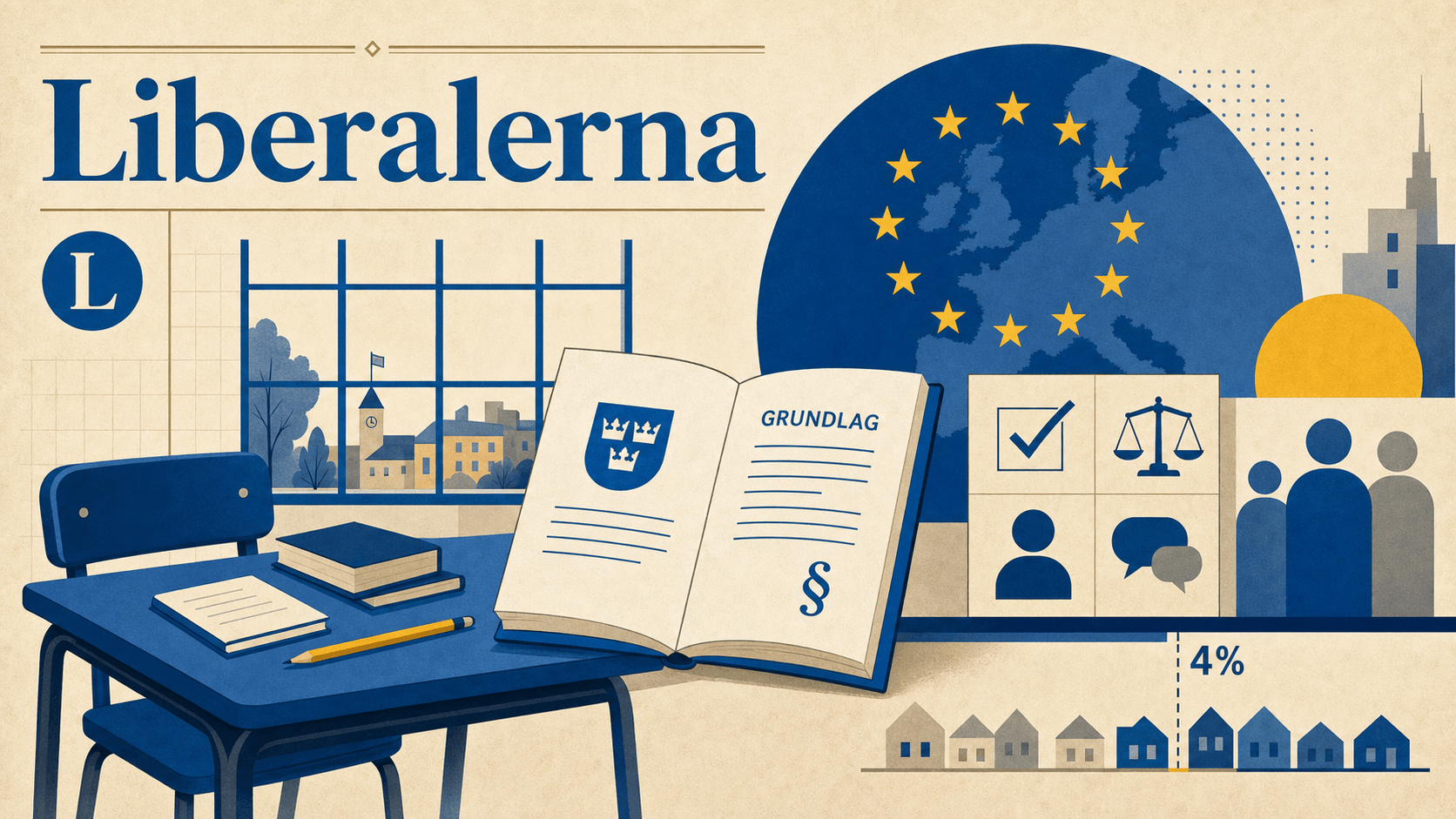
Liberalerna (L) is Sweden’s principal liberal party, founded in 1934 through the merger of Frisinnade folkpartiet and Sveriges liberala parti and historically known as Folkpartiet (Folkpartiet liberalerna from 1990, Liberalerna from 2015). It carries the long liberal-radical and free-church-liberal tradition of Carl Gustaf Ekman and Felix Hamrin in the 1930s and of Ola Ullsten in 1978–1979. Across the Alliance years it sat in the Reinfeldt cabinets of 2006–2014 as a coalition partner.
In 2022 the party reversed the 2018 Björklund line — that explicit Alliance cooperation with Sverigedemokraterna would be disqualifying — and on 14 October 2022 became one of the four signatories of the Tidö Agreement. Since 18 October 2022 the party has held coalition seats in the Kristersson cabinet under leader Johan Pehrson, who serves as minister for employment and integration.
Ideologically L is liberal centre-right, steering a labour-market and integration agenda inside the coalition. The 2022 turn into Tidö marks the sharpest reorientation in the party’s recent history, and the 2026 mandate question is whether L can sustain its identity as a small liberal party while sharing a policy contract with SD.
The deep value: not disappearing
L carries a century-old liberal tradition and a loudly held principle — always to “hold the line against anti-democrats.” But the party also carries an older fear: for years it has sat at the 4-percent threshold, below which lies exit from the Riksdag. When the principle met that fear, the fear won.
The turning point is not the entry into Tidö itself but the party-council decision of 28 March 2021, taken by 59 votes to 31: to work for a right-wing government even if it rests on SD. The Liberals themselves called it the biggest conflict with their own identity in the whole timeline. Leijonborg’s 2002 language test, which gave the party its best result in years, was an early run of the same logic: signature issues and survival outweigh doctrinal purity. This is a reading, not a neutral fact; for the full frame, see the essay power or principle.