1973
Left bloc · SA new king, the birth of 'Stockholm Syndrome', and the oil-price shock.
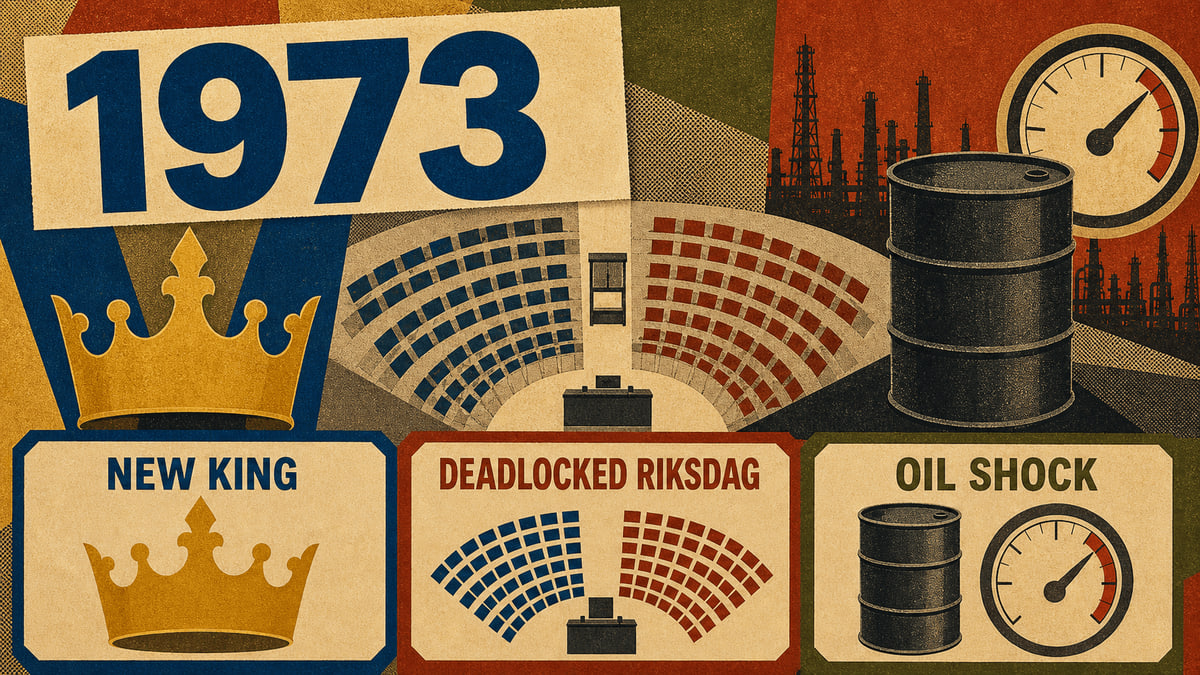
1973 infographic: new king, deadlocked Riksdag, and oil shock
AI-generated infographic using the page's 1973 anchors.
Highlights
- Carl XVI Gustaf accedes: King Gustaf VI Adolf died on 15 September aged 90, and his 27-year-old grandson Carl XVI Gustaf became king. General elections held the same day produced a historic deadlock — exactly 175 seats for each of the two parliamentary blocs.
- Stockholm Syndrome coined: Between 23–28 August, robber Jan-Erik Olsson held four bank employees hostage at Kreditbanken on Norrmalmstorg square. The hostages' unexpected sympathy for their captors led psychiatrist Nils Bejerot to coin the term 'Stockholm Syndrome', which entered global usage.
- OPEC oil shock: Following the Arab oil embargo of October 1973, Sweden rationed petrol and electricity. The quadrupling of oil prices ended the long postwar boom and forced Sweden to urgently reconsider its energy dependency.
Events in this year
1973 1973 Lottery Parliament The 1973 Riksdag election produced an exact 175–175 seat tie between the socialist and bourgeois blocs. Olof Palme's cabinet remained in office but tied votes were resolved by literally drawing lots — earning the parliament its lotteririksdagen nickname — while most major bills were settled through cross-bloc consensus agreements. Election 1965-1974 Million Programme 1965 In 1965 the Riksdag adopted the Million Programme — a plan to build one million dwellings in Sweden over ten years. By 1974 roughly one million homes had been built; Olof Palme oversaw the project as Minister of Communications. It became, relative to population, the largest housing programme in the world at its time and the third corner of post-war Folkhemmet alongside 1947 welfare reforms and 1959 ATP. Reform